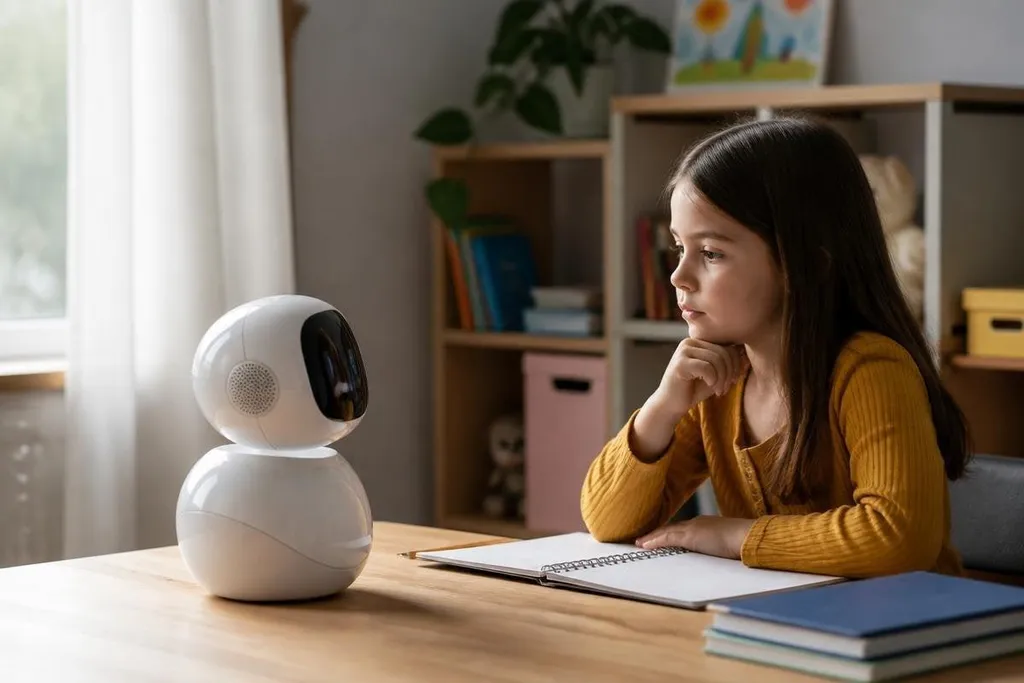
Talking robots can answer questions, guide homework, or help with a task. The same system may collect voice recordings, shape behavior, and make mistakes that a child cannot spot.
This debate needs clear rules before a robot enters a home, classroom, hospital, or play space.
Quick read
- Children may not understand what a robot records or where the data goes.
- A friendly voice can make a machine seem more trustworthy than it is.
- Adults need control over data, settings, updates, and the robot’s physical actions.
Trust needs limits
Children often learn through repetition. A robot that speaks with confidence can sound correct even when its answer is wrong, incomplete, or based on a poor reading of the situation.
That creates a duty for the adults around it. The robot should state when it does not know something, make it easy to ask an adult, and avoid presenting guesses as facts. A child should not need technical knowledge to question the machine.
The design also matters. A robot with a face, a name, or a warm voice may feel like a companion, but it remains a programmed system. Its makers should not use that feeling to push purchases, collect extra data, or keep a child engaged for longer than needed.
I’d keep the rule simple: a robot may support a child, but it should never become the child’s private authority.
Consent is more than pressing a button
A child may agree to speak with a robot without understanding recording, data storage, or later use. That raises a basic question: who gives permission, and what exactly are they agreeing to?
Parents and guardians need plain information before use. They should see what sensors are active, what the robot saves, how long records remain, and how to delete them. A school or care provider also needs a clear reason for using the system.
A consent screen filled with long terms does not solve this problem. The robot should ask for only the data needed for its stated task, with a visible way to pause microphones, cameras, and network access.
The child needs a voice in the process too. Their view may not replace adult permission, but adults should explain the system in words the child can understand and take their refusal seriously.
Safety includes social harm
Physical safety is easy to picture: a moving arm can pinch a hand, or a mobile robot can block a doorway. Ethical safety reaches further because a robot can repeat private details, label a child unfairly, or respond badly during distress.
A system used near children needs clear limits on physical movement and speech. It should not give medical, legal, or emergency advice without an adult or qualified professional checking the situation. It should also have a clear stop control that a child can reach.
The data needs care after collection. Access should be limited, records should have a set deletion date, and adults should know how to report a harmful answer or unsafe action.
A maker should explain what happens after a software update changes the robot’s behavior.
A parent weighing a robot for home use can read robotics reporting on child-focused systems alongside the maker’s safety plan. That comparison shows what the robot senses, what it decides, and which adult must step in when it fails.
Who carries the blame?
Mistakes may involve several people: the maker, the school, the parent, the software supplier, or the person who set it up. Responsibility becomes hard to assign when each party controls only one part of the system.
That is why buyers should ask for named contacts, incident records, update details, and a way to turn the system off. A product should not leave families guessing about who will respond after harm occurs.
The strongest case for robots around children comes when the task is narrow and an adult remains close. Reading practice, guided exercises, or a controlled classroom demonstration are easier to review than a robot given broad freedom in a child’s private space.
A practical check before use
Use this list before a robot works with a child:
- Name the task. Write down what the robot will do and what sits outside its job.
- Check the sensors. Identify every camera, microphone, location sensor, and network link.
- Set an adult review. Decide who checks answers, behavior logs, updates, and complaints.
- Test the stop control. Make sure a child and supervising adult can pause motion and recording.
- Set a deletion date. Record when stored audio, video, messages, and reports will be erased.
- Plan for failure. Give the child a person to contact when the robot is wrong, upsetting, or unsafe.
These steps do not remove every ethical question. They give families and institutions a way to see the risks before trust grows around the machine.
The next useful test is small: run the robot for one limited task, with an adult present, and review every record it creates before wider use.